Animated Efficiency Comparison
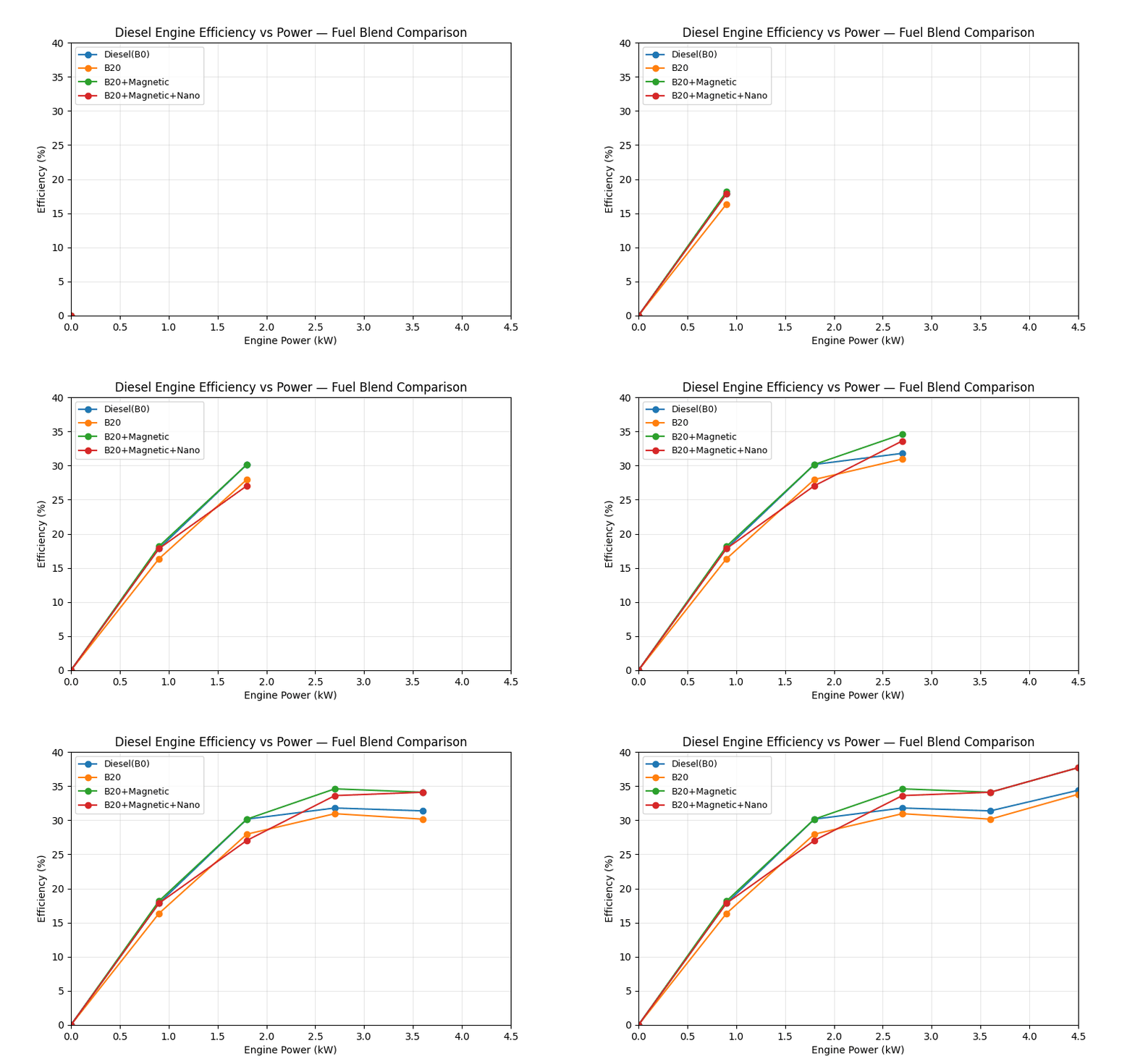
Animated build-up of thermal efficiency curves across all four tested fuel configurations, generated with the accompanying Python analysis script.
Interactive dashboard exploring engine performance and emissions when running diesel blended with biodiesel, magnetic fuel conditioning, nano-additives, and hydrogen enrichment.
This project, conducted by undergraduate students at Kafr El-Sheikh University's Faculty of Engineering (supervised by Dr. Magda Elfakharany and Prof. Dr. Fawzy Abo Taleb), investigated a low-cost lab test rig to measure diesel engine performance and emissions under different fuel blends: pure diesel, 20% biodiesel (from waste sunflower oil), biodiesel with magnetic fuel conditioning, nano-additive enhanced fuel, and hydrogen-enriched fuel via a PEM electrolyzer cell.
To boost engine efficiency further, the team built a PEM (Polymer Electrolyte Membrane) electrolyzer cell that splits water into hydrogen and oxygen, which is fed into the engine intake alongside the biodiesel blend.
| Step | Reaction |
|---|---|
| Anode | 2H₂O → O₂ + 4H⁺ + 4e⁻ |
| Cathode | 4H⁺ + 4e⁻ → 2H₂ |
Adding H2 increased engine efficiency but also raised NOx emissions. The team compensated by blending in 7% kerosene, which reduced NOx while maintaining improved efficiency.
Adjust the sliders to replicate the lab's Arduino-based calculation logic (heating value fixed at 45,000 kJ/kg for diesel).
Animated build-up of thermal efficiency curves across all four tested fuel configurations, generated with the accompanying Python analysis script.
The lab test rig used a single-cylinder, 4-stroke diesel engine coupled to a 6 kVA star-type generator at 1500 RPM — exactly as described in the project [Chapter 1 & 3]. This live 3D model reproduces that configuration, with sliders driving the same variables measured in the study.
Drive the simulation using the same parameters recorded in Chapter 5.
Formulas used (from the book, Chapter 3): ṁa = ρ·(π/4)·D²·Va with D = 2.8 cm; η = Pengine / (ṁfuel × Heating Value). Biodiesel % and magnetic current visually affect piston speed and exhaust plume color/intensity to represent the efficiency/NOx trade-off observed in the study.